

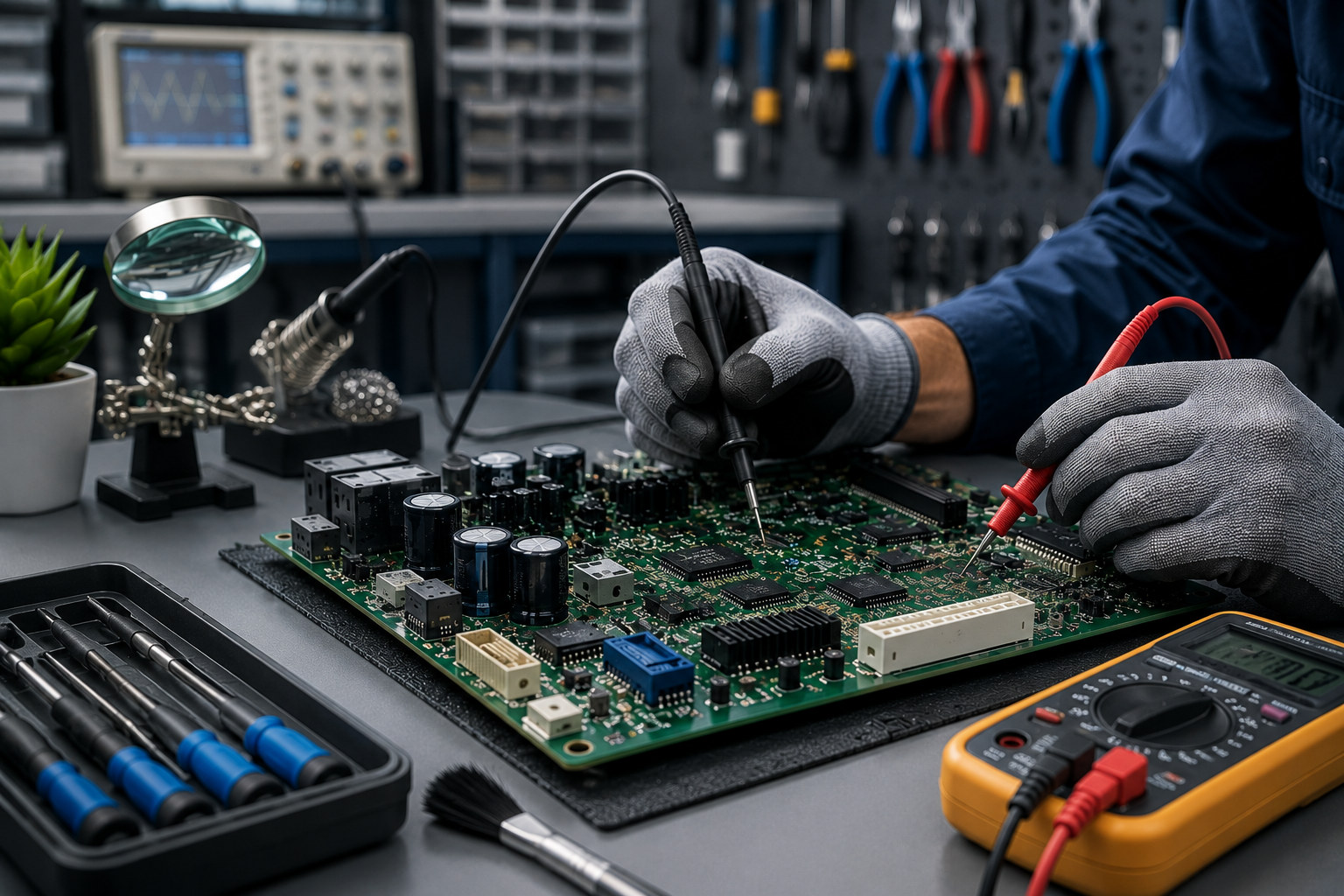
The Importance of Regular Electronic Device Maintenance
Electronic devices have become an essential part of modern homes, offices, industries, and businesses. From control systems and smart devices to electronic components and connected equipment, reliable performance is important for maintaining productivity and efficiency.
However, even the best electronic equipment requires proper maintenance. Regular inspection and timely servicing can help identify potential issues before they become expensive problems.
Why Is Electronic Device Maintenance Important?
Electronic devices operate through a combination of components, circuits, power systems, sensors, and software. Over time, factors such as dust, heat, electrical fluctuations, continuous usage, and environmental conditions can affect their performance.
Regular maintenance helps businesses and users keep their equipment operating safely and efficiently.
1. Prevent Unexpected Failures
A sudden electronic failure can interrupt business operations and lead to unnecessary downtime. Routine inspections can help identify damaged components, overheating, loose connections, and other potential problems early.
2. Improve Device Performance
Electronic equipment that is properly maintained can perform more consistently. Cleaning, testing, calibration, component checks, and software updates can all contribute to better overall performance.
3. Extend Equipment Lifespan
Replacing electronic devices frequently can increase operational costs. Proper maintenance can help extend the useful life of equipment and delay unnecessary replacements.
4. Improve Energy Efficiency
Faulty components or inefficient operation can sometimes result in unnecessary power consumption. Maintaining electronic systems properly can help them operate more efficiently.
5. Reduce Long-Term Costs
Preventive maintenance is often more economical than emergency repairs. Identifying a small issue early can prevent it from developing into a major component failure.
Common Electronic Maintenance Practices
Depending on the type of equipment, maintenance may include:
- Visual inspection of components
- Cleaning electronic equipment
- Checking power connections
- Testing voltage and current levels
- Inspecting circuit boards
- Checking sensors and controllers
- Monitoring operating temperature
- Updating firmware or software
- Testing communication and connectivity
- Replacing worn or damaged components
The exact maintenance schedule depends on the type of device, operating environment, usage frequency, and manufacturer recommendations.
When Should Electronic Equipment Be Serviced?
Some warning signs should not be ignored. These may include unusual heating, intermittent operation, unexpected shutdowns, unusual sounds, inconsistent performance, connectivity problems, or repeated system errors.
Addressing these issues early can help prevent more serious failures.
Professional Support Makes a Difference
Electronic device maintenance requires the right tools, technical knowledge, and careful handling. Attempting to repair complex equipment without appropriate expertise can potentially cause further damage.
Working with a professional electronic device and service provider can help ensure that equipment is properly inspected, maintained, and serviced.
Reliable Electronics Start With Proper Care
Technology continues to become more advanced, connected, and essential to everyday operations. As dependence on electronic devices grows, keeping them reliable becomes equally important.
At LUMICA – Electronic Devices & Services, our focus is on helping customers get dependable performance from their electronic technology through suitable devices, technical solutions, and professional service support.
LUMICA – Reliable Electronics. Professional Service. Smarter Solutions.