

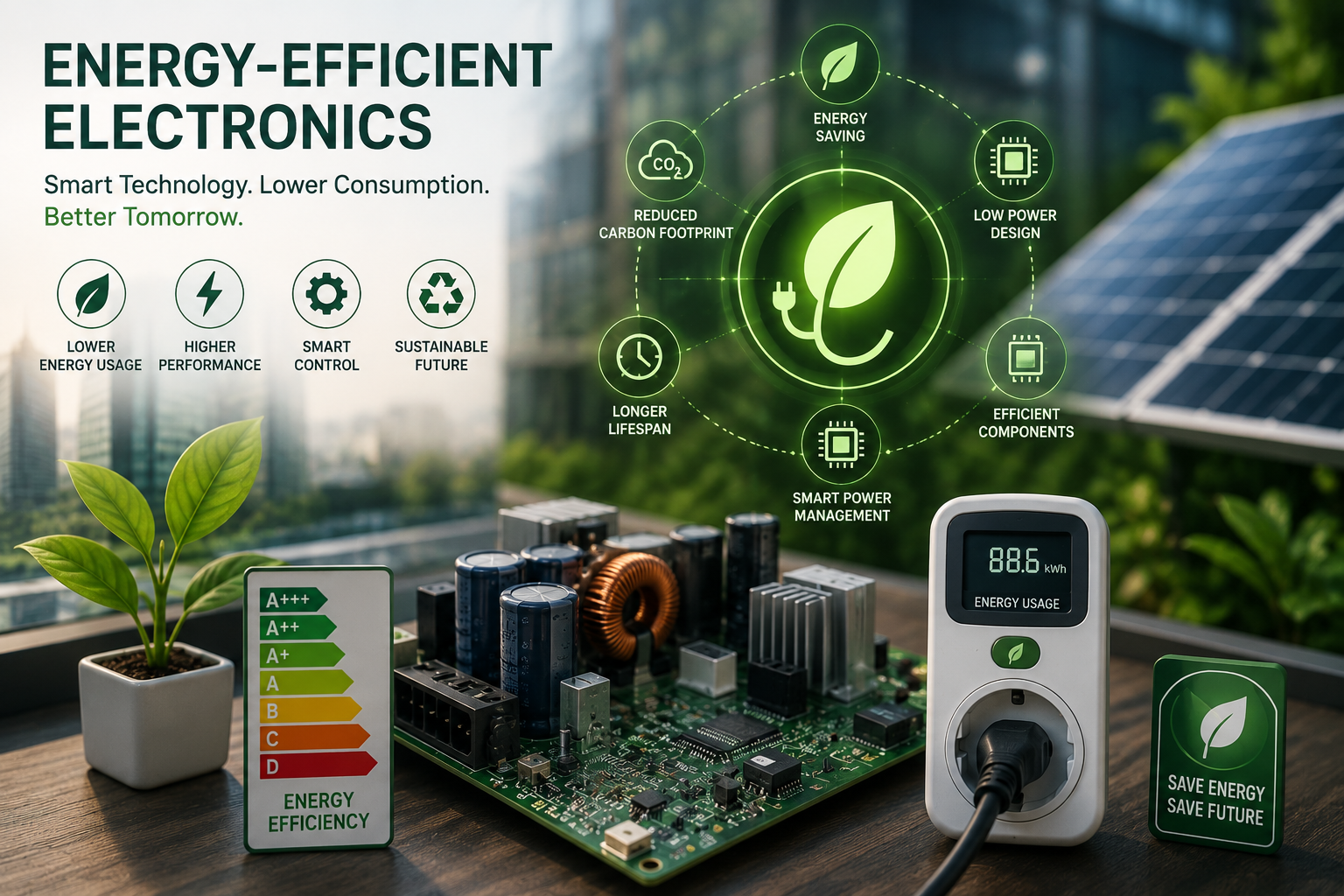
Why Energy-Efficient Electronics Are Essential for the Future
Energy efficiency has become one of the most important considerations in modern electronics. As businesses and consumers use more connected devices, automated systems, and intelligent technologies, reducing unnecessary energy consumption is becoming increasingly important.
Modern electronics are therefore moving beyond the traditional goal of simply delivering more performance. The focus is increasingly on achieving the right balance between performance, reliability, power consumption, and overall system efficiency.
What Makes Electronics Energy Efficient?
Energy-efficient electronics are designed to perform their intended functions while minimizing unnecessary power consumption.
Efficiency can be influenced by several factors, including:
- Efficient power supplies
- Low-power electronic components
- Intelligent power management
- Efficient processors and controllers
- Smart sensors
- Optimized system design
- Automated power-saving functions
Importantly, efficiency is not determined by one component alone. The interaction between hardware, software, power systems, and other parts of the overall system can have a major impact.
Benefits of Energy-Efficient Devices
Lower Energy Consumption
Efficient devices can reduce unnecessary electricity usage, particularly when deployed across offices, commercial facilities, or industrial environments.
Improved Device Performance
Efficient power management can help electronic systems operate more consistently and effectively.
Reduced Operating Costs
For businesses using large numbers of electronic devices, even small improvements in energy efficiency can become significant over time.
Longer-Term Sustainability
The electronics industry is increasingly looking at sustainability across the entire lifecycle of electronic systems, including energy consumption, material use, and electronic waste.
Energy Efficiency and Smart Technology
Smart electronics can play an important role in energy management. Connected sensors and monitoring systems can provide information about how and when energy is being consumed.
Businesses can then use this information to identify unnecessary consumption, automate certain processes, and make better decisions about their electronic infrastructure.
What Should You Consider When Choosing Electronics?
When selecting electronic devices or systems, look beyond the initial purchase price. Consider:
Power consumption – How much energy does the device require?
Expected usage – Will it operate continuously or intermittently?
Reliability – Is it designed for the environment in which it will be used?
Scalability – Can the solution grow with your requirements?
Maintenance – How easy is it to maintain and service?
Technical support – Is professional assistance available when required?
Building a Smarter and More Efficient Future
Energy efficiency is becoming a key consideration across consumer electronics, industrial technology, IoT, automation, and power electronics.
At LUMICA, we understand that modern electronic solutions need to deliver more than functionality. They should provide dependable performance, practical value, and efficient operation.
LUMICA – Electronic Devices & Services is committed to helping customers find electronic solutions that support today’s requirements while preparing them for tomorrow’s technology.
Smart technology. Reliable electronics. Better possibilities.